Europe’s second club competition, and why it still matters
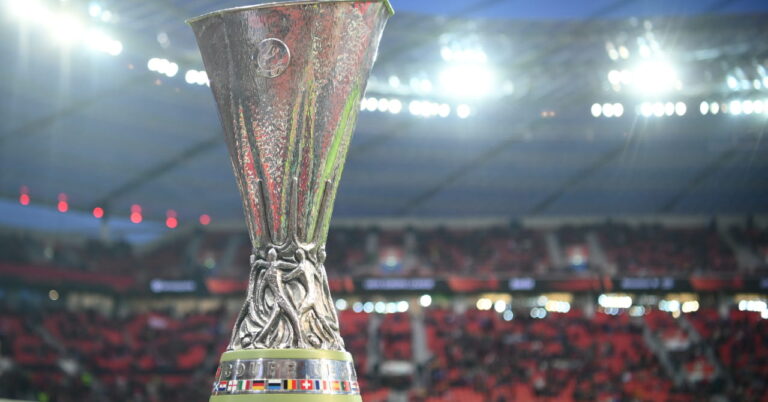
No other club competition in European football has produced quite as many underdog stories, penalty drama and managerial legends as the UEFA Europa League. It began life in 1971 as the UEFA Cup, and more than five decades later it remains the target for dozens of clubs who will never qualify for the Champions League but still want a serious crack at continental silverware.
Winning it means something. Since 2014/15, lifting the trophy has come with automatic entry into the following season’s UEFA Champions League, bypassing the summer qualifying rounds entirely. That alone makes it worth fighting for.
How the competition started
The UEFA Cup launched in 1971 with Tottenham Hotspur beating Wolverhampton Wanderers 3-2 on aggregate to become its first winners. For the next three decades the format barely changed: group stage, knockout rounds, two-legged final. The final went to a single neutral-venue match in 1998, when Inter Milan beat Lazio in Paris.
In 2009 UEFA rebranded the competition as the UEFA Europa League, with a redesigned trophy and expanded format. The name stuck. The prestige grew. And the standard of clubs involved improved steadily as the Champions League exit route was removed and replaced with direct relegation to the Conference League.
The new format explained
From the 2024/25 season, UEFA replaced the old group stage with a league phase involving all 36 participating clubs. Each side plays eight matches during this phase, four at home and four away, against eight different opponents drawn from across four seeded pots.
The table at the end of the league phase decides everything. The top eight clubs go straight through to the round of 16. Teams finishing between ninth and 24th drop into a two-legged knockout play-off, with 16 winners joining the top eight in the last 16. Any club finishing 25th or lower is out of European competition for the remainder of the campaign, with no safety net into the Conference League.
From the round of 16 onwards it is a straight two-legged knockout until the single-match final at a pre-selected neutral venue. The away goals rule no longer applies at any stage.
How clubs qualify
Routes in vary by nation. Clubs can earn entry through their domestic league position, cup competition results or as losing teams from the Champions League qualifying rounds. Seven domestic cup winners per cycle earn automatic spots. Clubs knocked out of the Champions League league phase no longer drop into the Europa League under the post-2024 structure.
The most successful club in the competition’s history
No club has dominated this competition like Sevilla. The Spanish side have won the Europa League or UEFA Cup seven times, more than double the tally of their nearest rivals. Liverpool, Juventus and Internazionale have each won it three times. Sevilla have seven, and they have never lost a final.
Three of those titles came consecutively between 2014 and 2016, a run that has never been matched. Real Madrid won back-to-back UEFA Cups in 1985 and 1986; Sevilla equalled that with wins in 2006 and 2007, then went one further. Their grip on the competition during that period was something no other club in European football history has replicated.
The manager who owns the trophy
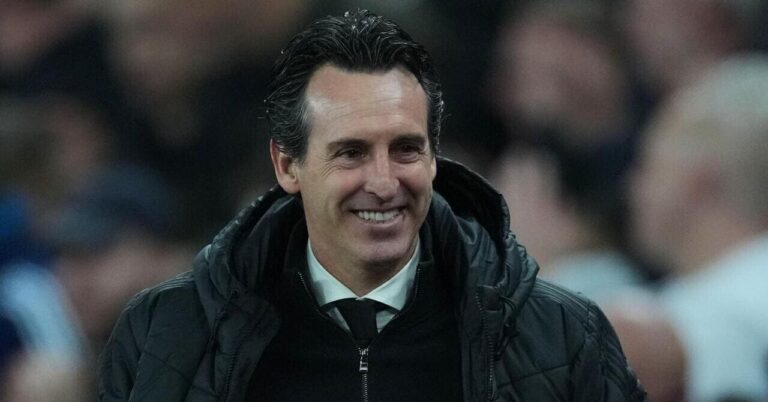
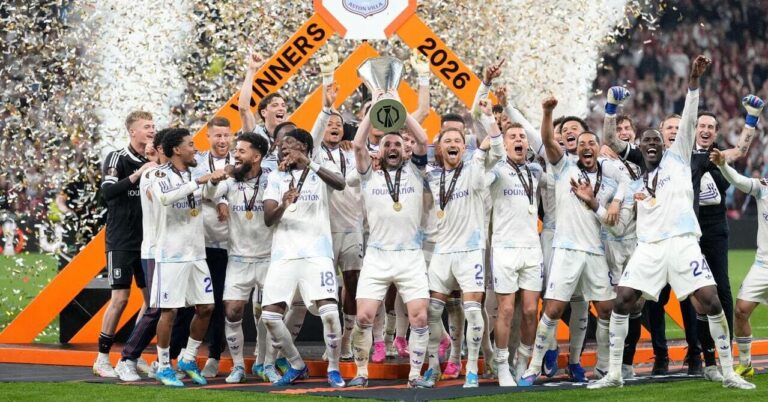
Unai Emery’s record in this competition is without parallel in the history of football management. The Spanish coach won the Europa League with Sevilla three times between 2014 and 2016, added a fourth title with Villarreal in 2021 (the 11-10 penalty shootout win over Manchester United remains one of the strangest finals on record) and then claimed a fifth with Aston Villa in 2026, beating SC Freiburg 3-0 in Istanbul.
No other manager has won a major European competition five times. Emery’s record in this competition puts him in a category of his own. Diego Simeone is the only other manager to have won the Europa League more than once in the current era, doing so twice with Atlético de Madrid.
Memorable finals
The single-match final format has produced some genuine drama. Villarreal’s 11-10 shoot-out win over Manchester United in 2021 in Gdansk went to 22 penalties before David de Gea missed the decisive kick. Sevilla came from behind to beat Roma on penalties in Budapest in 2023, claiming their seventh title in the process. Aston Villa’s 3-0 defeat of Freiburg in Istanbul in 2026 was the most one-sided final in years, goals from Youri Tielemans and Emiliano Buendía in the first half before Morgan Rogers wrapped it up after the break.
Villa’s win ended a 44-year wait for European silverware, taking the club back to the Champions League and completing one of the more remarkable managerial turnarounds in recent English football. Emery had taken over with the club one place above the relegation zone in November 2022.
Follow Europa League coverage on 101 Great Goals
Every stage of the Europa League is covered across 101 Great Goals, from the early qualifying rounds in July through to the final in May. Match previews with predicted line-ups, team news and stats go live ahead of every significant fixture, with post-match reports and goal clips to follow.
For a deeper look at individual clubs in the competition, squad guides and fixture lists for each participating team are updated as the draw is made each summer. All the latest Europa League news is updated throughout each matchday.