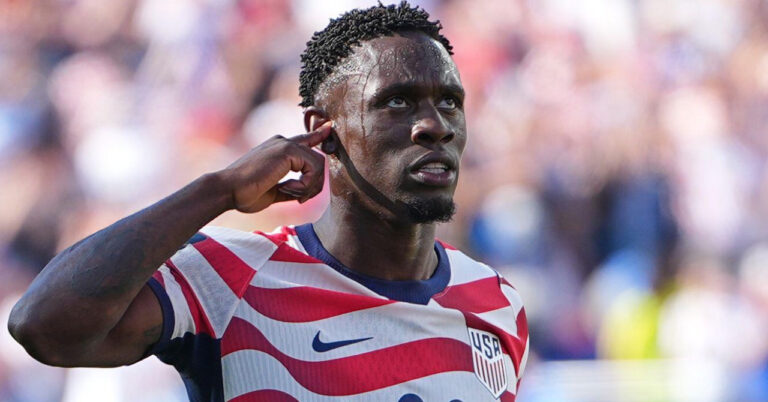

UEFA has slammed FIFA’s decision to suspend USA striker Folarin Balogun’s one-game ban, describing it as an “unprecedented, incomprehensible and unjustifiable decision”.
Balogun had been expected to miss Monday’s match against Belgium after being shown a red card during the USA’s victory over Bosnia-Herzegovina in the round of 32 for a challenge on Tarik Muharemovic.
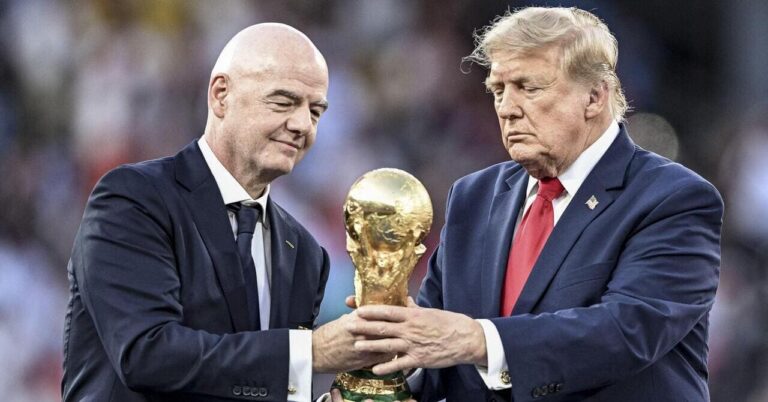
However, FIFA announced on Sunday that the 25-year-old’s one-match ban had been suspended for 12 months after an intervention from US president Donald Trump.
Trump, who is close to FIFA president Gianni Infantino, thanked Fifa for “reversing a great injustice” in a post on Truth Social.
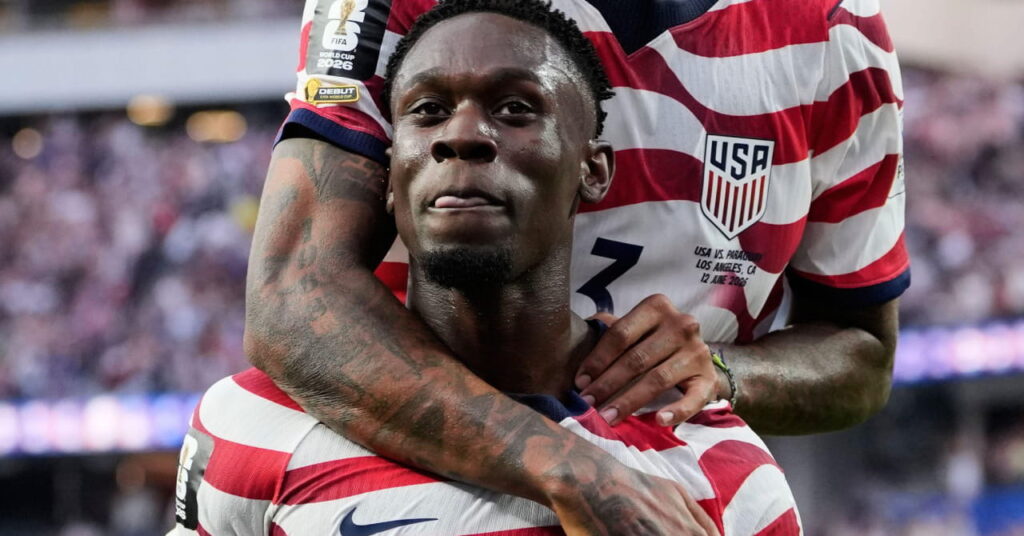
FIFA has ‘crossed a red line’, says UEFA
UEFA took a dim view of FIFA’s decision and launched an extraordinary attack on the world game’s governing body.
A statement read:”Yesterday’s decision to suspend for a probationary period of a year the implementation of the one-match automatic suspension following the red card issued to the player Folarin Balogun crossed a red line.
“Football, like any other sports, relies on rules, which are the basis for fair, honest and transparent competition. Sometimes rules are open to interpretation. In this case not. A minimum automatic suspension of one match following a red card is not a discretionary option and does not require the decision of a competent body to be enacted. It is a principle embedded in regulations, which cannot be made subject to exceptions, let alone in the middle of a tournament where several other players have been in the same situation and regularly served their suspension.
“When the certainty of rules is no longer guaranteed by its guardians, the integrity of the game is at stake and the credibility of a competition is undermined. Equally, such decision creates a precedent in the ongoing tournament, where similar situations will now require an equal treatment, to the detriment of the competition.
“Football is the most loved sport in the world because it is a beautiful game and is trusted because it is played everywhere with the same laws. A tournament is never a pure standalone and, if the tournament in question is the World Cup, it has the power to drive positive or negative consequences on the game as a whole.
“We express our disbelief at such an unprecedented, incomprehensible and unjustifiable decision.”
Belgium boss Garcia thought Balogun decision was a joke
Belgium were understandably annoyed by the ruling and will now have to adjust their tactics to cope with Balogun, who is the United States’ top-scorer at the World Cup with three goals.
“I didn’t know that at the World Cup, the 5th of July is actually the first of April – it’s April Fools,” Red Devils boss Rudi Garcia said yesterday.
The Belgian Football Association later released a statement expressing its dissatisfaction and confirmed it was examining its options.
Balogun was, at the time of FIFA’s decision, the 12th player to have been sent off at the World Cup, but he is the only one to have had his punishment downgraded.
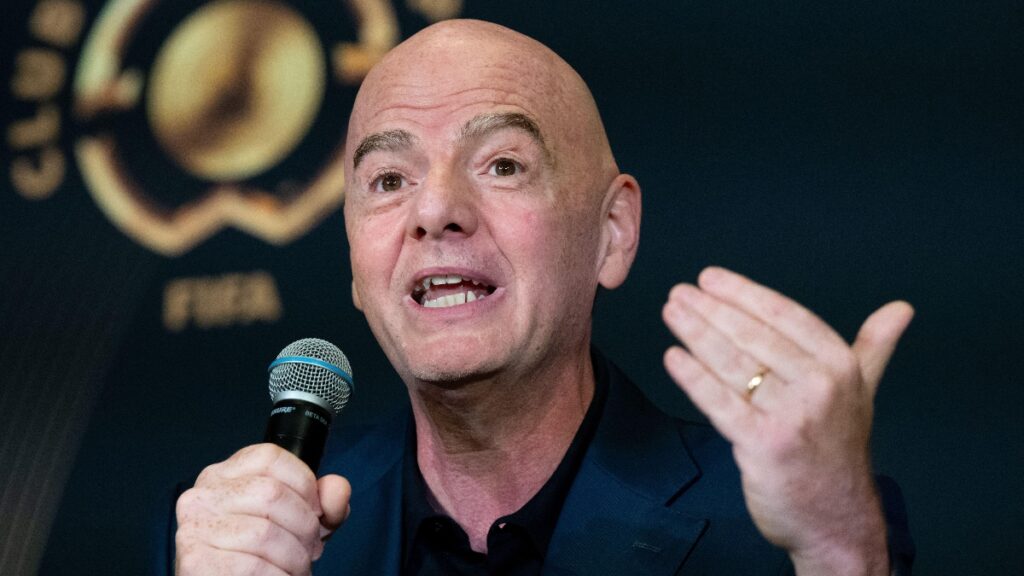
FIFA set precedent with Ronaldo decision prior to World Cup
It is not the first time FIFA has tweaked the rules regarding suspensions.
Cristiano Ronaldo’s three-game ban, incurred after being sent-off playing for Portugal against the Republic of Ireland in the qualifiers, was reduced to one, enabling the superstar to play in their World Cup group stage games.
Qatar midfielder Assim Madibo also saw his suspension altered, however, his was increased. Madibo was sent off in the game with Canada for a challenge that broke the leg of Ismael Kone and FIFA upgraded the standard one-match suspension to five.
Blatter weighs in on FIFA and Infantino
Even disgraced former FIFA president Sepp Blatter criticised the organisation he used to lead.
Blatter, whose 17-year spell as president ended in 2015 after a corruption scandal, wrote on X: “Red cards are not overturned by political phone calls. They are overturned by rules, evidence and independent bodies. If a US President intervenes with the FIFA President — and a player is suddenly cleared before a World Cup knockout match — the question is unavoidable: Quo vadis, FIFA? Football must never become a playground for political power.”
You Should Also Read