LaLiga: The Full Guide to Spanish Football’s Top Flight
Spanish football has produced more than its share of the sport’s greatest moments. Five consecutive European Cups in the 1950s. Johan Cruyff reinventing how the game is played. Lionel Messi and Cristiano Ronaldo trading Ballon d’Or wins across a decade that may never be repeated. All of it happened in LaLiga — and the league is still at it.
How the League Works
Twenty clubs compete across a season that runs from August to May. Every team faces every other team twice — once at home, once away — for a total of 38 matches each. Three points for a win, one for a draw, nothing for a loss. The club with the most points at the end takes the title.
One rule sets LaLiga apart from leagues like the Premier League: when clubs finish level on points, the tie is broken by head-to-head record rather than goal difference. It sounds like a footnote, but it has decided title races.
The bottom three clubs go down to the Segunda División each season. The top two from the second tier come straight back up, with a third spot settled through a play-off. It keeps both ends of the table competitive well into spring.
Where It All Began
LaLiga was founded in 1929. The first season featured just ten clubs, with Barcelona crowned the inaugural champions. The very first goal in the competition’s history was scored by Espanyol’s Pitus Prat — a detail barely anyone outside Spain knows, but one that opens nearly a century of history.
The league grew steadily. It expanded to 16 clubs in 1934, reached 18 in 1971, and settled at the current 20-team format in 1997. In that time, 62 different clubs have played in the top flight — but only three have never dropped out of it: Real Madrid, Barcelona and Athletic Bilbao.
The Eras That Shaped Spanish Football
The 1950s belong to Real Madrid. Alfredo Di Stéfano, Ferenc Puskás and a squad assembled with ruthless ambition won five consecutive European Cups alongside multiple league titles. It was a period that put Spanish football on the world map for the first time.
Four decades later, Johan Cruyff built something just as significant at Barcelona. His Dream Team of the early 1990s played a brand of possession football that the rest of Europe spent years trying to copy. That side laid the groundwork for the tiki-taka era and a generation of Spanish players who went on to dominate international football.
The Three Clubs Who Run the Show
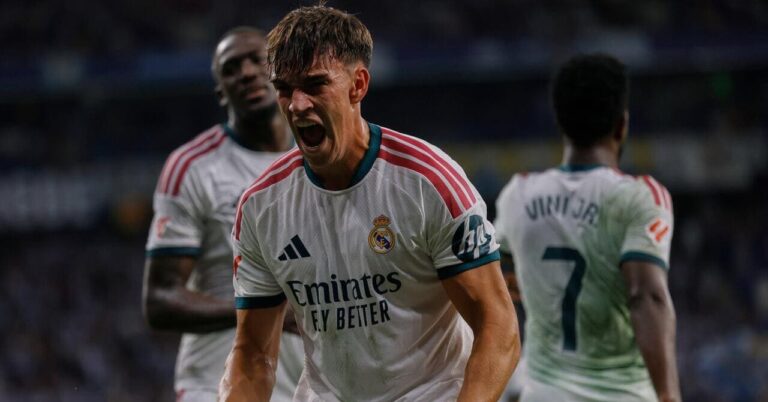
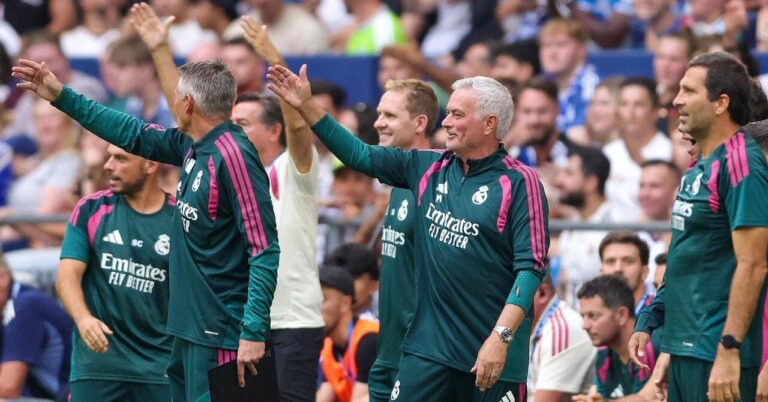
Real Madrid hold the all-time record with 36 LaLiga titles. They are also the most decorated club in world football, with 15 European Cup and Champions League wins to their name. The Santiago Bernabéu, rebuilt and reopened in recent years, holds more than 80,000 supporters and remains one of the great footballing cathedrals.
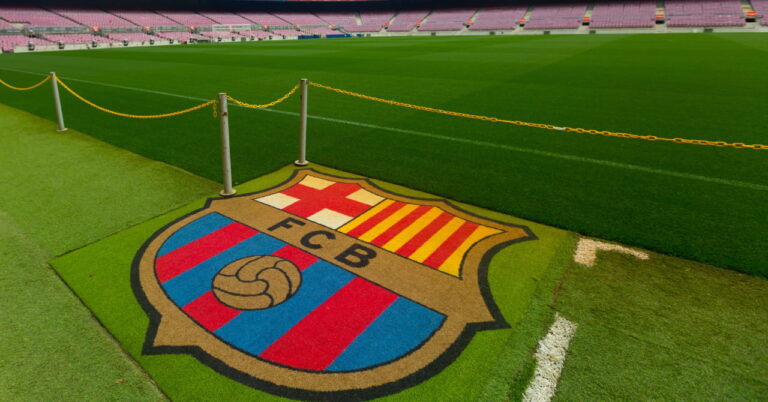
Barcelona have 28 league titles and a stadium, the Camp Nou, that is the largest in Europe. Their identity runs through Catalan culture as much as it does through football. The club’s commitment to a particular style of play — short passes, positional discipline, relentless pressing — has shaped coaches and academies across the continent.
Atlético Madrid are the third pillar. For most of their history they lived in the shadow of their city rivals, but Diego Simeone changed that. Under his management they won their first LaLiga title in 19 years in 2014 and reached back-to-back Champions League finals. Simeone’s sides have consistently punched above their financial weight — which, against Real Madrid and Barcelona, is saying something.
El Clásico: Still the Biggest Game in Club Football
Twice a season, Real Madrid and Barcelona meet in El Clásico. It is not simply the most watched club match on the planet — it carries the weight of Spanish political and cultural identity. Madrid is associated with centralism; Barcelona with Catalan nationalism. Those tensions were sharpest during the Franco era, but they have never fully dissolved, and they give the fixture an edge that a pure sporting rivalry rarely sustains across generations.
On the pitch, the numbers tell their own story. Together, Real Madrid and Barcelona have won roughly 68 per cent of every LaLiga title ever contested. No two clubs in any major European league come close to that level of combined dominance.
The Records That Stand
Lionel Messi is LaLiga’s all-time top scorer with 474 goals. His tally of 50 goals in a single season — set in 2010-11 — is the competition’s record. Cristiano Ronaldo, who scored over 300 LaLiga goals during nine seasons at Real Madrid, chased him every year without quite catching him.
Before either of them, there was Telmo Zarra. The Athletic Bilbao striker scored 251 LaLiga goals in the 1940s and 1950s, a record that stood for more than six decades. The award given each season to the highest-scoring Spanish player in the division is named after him — the Zarra Trophy.
The appearance record belongs to a goalkeeper. Andoni Zubizarreta made 622 LaLiga appearances across a career that spanned Athletic Bilbao, Barcelona and Valencia. It is a number that speaks to longevity and reliability in equal measure.
LaLiga’s Place in European Football
Spanish clubs have accumulated more European trophies than those from any other country. LaLiga sides have won 18 Champions Leagues, 11 Europa League or UEFA Cup titles and 15 UEFA Super Cups. For much of the last two decades, the dominant force in continental football has come from Spain.
The league’s global reach reflects that. Matches are broadcast across Latin America, Asia and Africa, driven largely by the fanbases of Real Madrid and Barcelona, which are among the largest in world sport. For all the financial clout of the Premier League, LaLiga has rarely struggled for star power.
Follow LaLiga With 101 Great Goals
Transfer news, match reports, squad analysis and everything from the Bernabéu to the Metropolitano — 101 Great Goals covers LaLiga from the first whistle of the season to the last. Bookmark this page and check back whenever the news breaks.